
Table of Contents
Table of Contents
Introduction
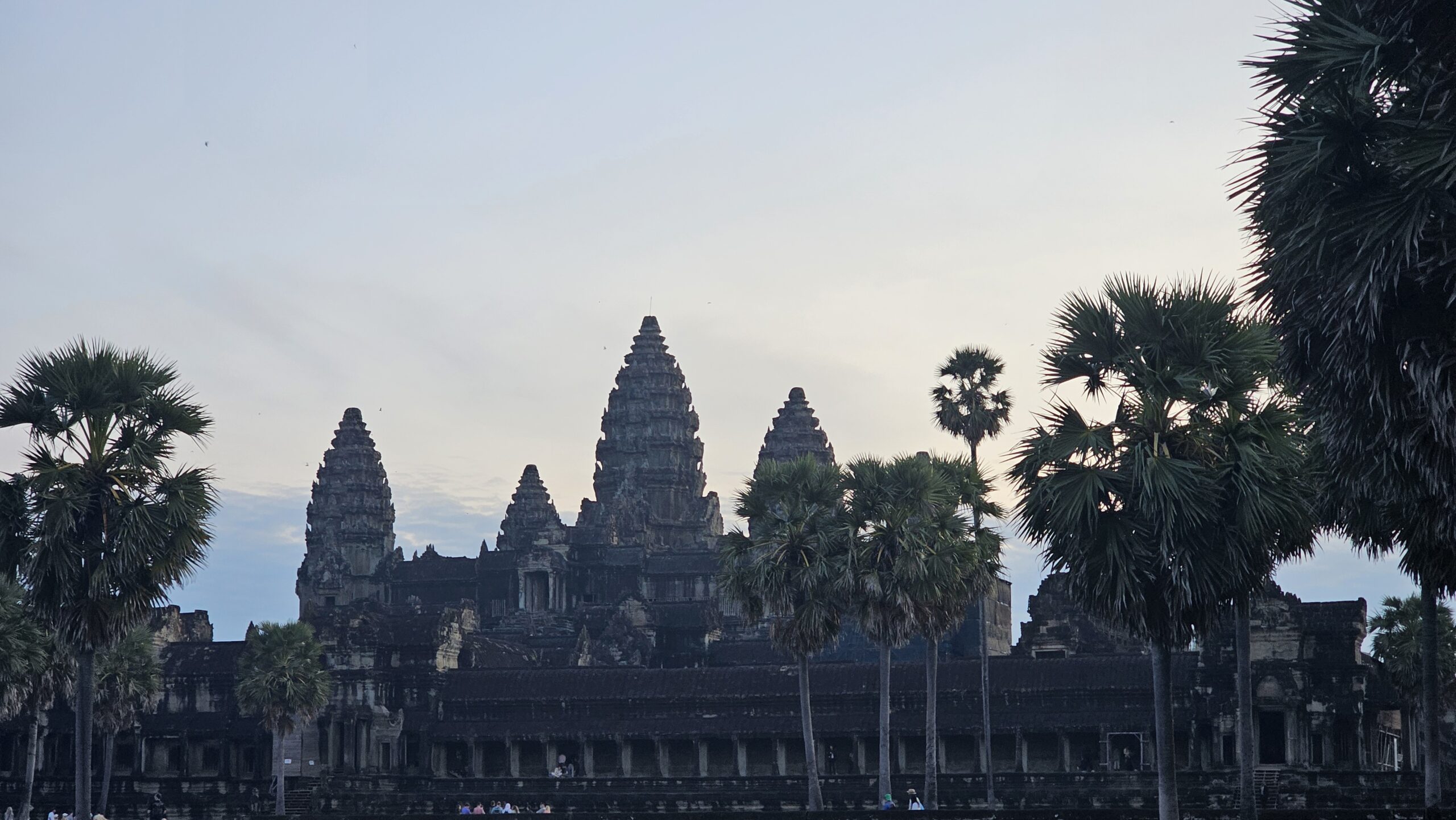
There are certain places in the world that appear on almost every travel bucket list, and Angkor Wat is one of them. Even if you have never visited Cambodia, chances are you have seen photographs of its iconic towers rising above the trees or reflected perfectly in the water at sunrise. For years I had seen those images online and in travel magazines, and eventually I decided it was time to experience Angkor Wat for myself.
My first visit was back in 2018, and then I returned again in 2024. The difference between those two visits was remarkable. Not only had Siem Reap changed dramatically, but my own travel style had changed too. Returning to a destination years later is always interesting because you notice things that completely escaped your attention the first time around.

Back in 2018, Siem Reap felt much rougher around the edges. There were dirt roads in places, construction seemed to be happening everywhere, and the tuk tuk drivers were far more aggressive when it came to finding customers. By 2024, the transformation was incredible. Roads were paved, infrastructure had improved significantly, and the atmosphere felt more relaxed and polished. The town still retained its Cambodian charm, but it felt far more developed than I remembered.
Of course, the main reason most people come here is Angkor Wat itself. As the largest religious monument in the world and a UNESCO World Heritage Site, it is one of Southeast Asia’s greatest attractions. Yet despite seeing thousands of photos before arriving, nothing quite prepares you for the scale of the place.
The word that immediately came to mind during both visits was simple: massive.
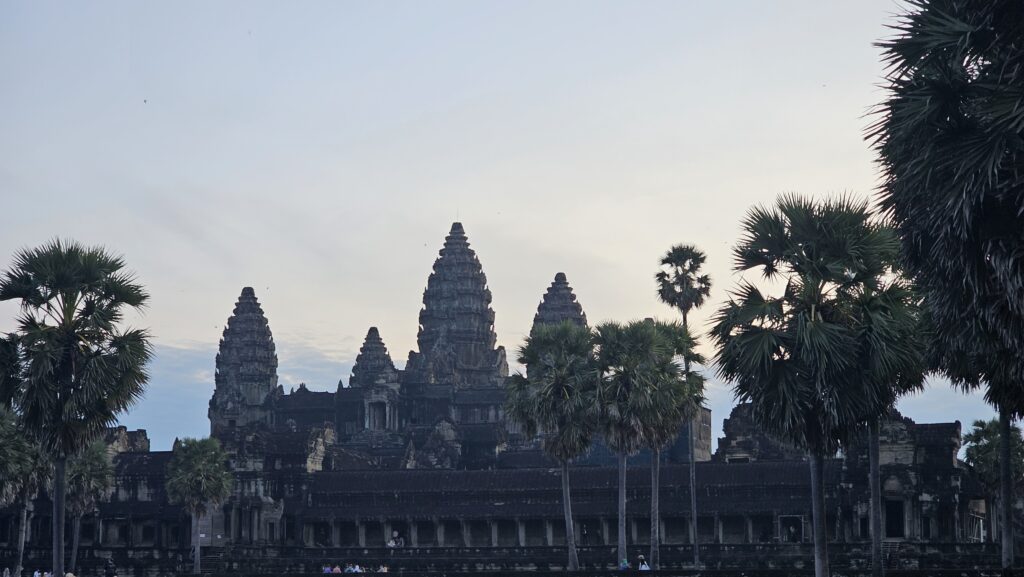
Angkor Wat is not just one temple. That was something I did not fully appreciate before my first trip. I honestly arrived thinking I would see one famous temple and then head back to town. Instead, I discovered an enormous complex of temples, ruins, ancient walls, jungle-covered pathways, and historical sites spread across a huge area.
My expectations were high before both visits, and somehow Angkor Wat still managed to exceed them.
Arrival And Preparation
Arriving in Siem Reap is surprisingly easy these days. Whether you arrive by air or overland, the city is well connected and geared towards tourism. During my first visit in 2018, the journey felt more adventurous. The roads around parts of the city were rougher, and everything felt slightly chaotic.
By 2024, things were completely different.
The city felt modern and organized while still maintaining the atmosphere that makes Cambodia so appealing. Tuk tuks remained everywhere, but the constant pressure from drivers trying to secure customers had noticeably reduced compared to my earlier visit.
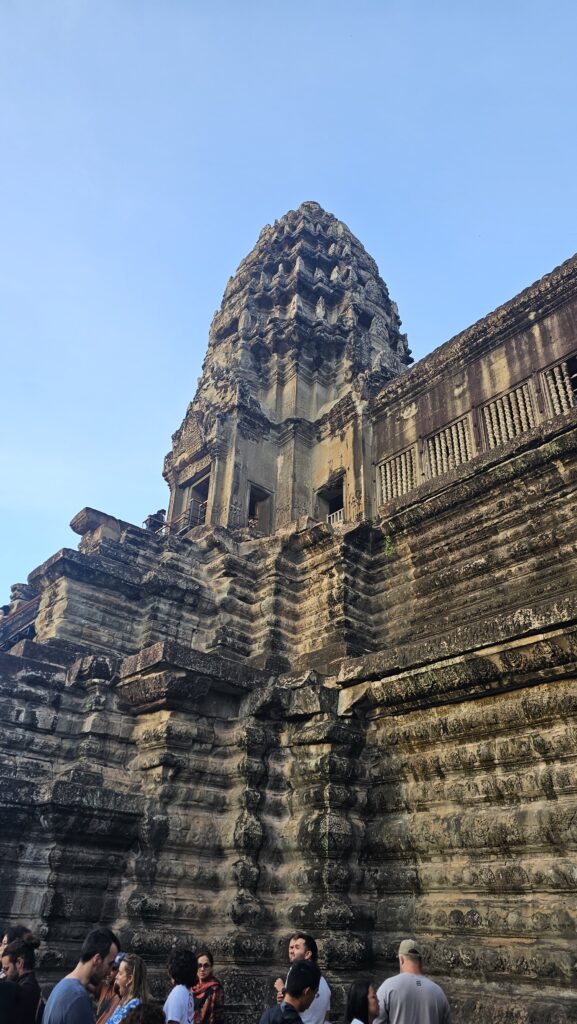
Preparation is important when visiting Angkor Wat.
Many people underestimate just how physically demanding a visit can be. Walking through Angkor Wat sounds easy on paper until you realize you are spending hours in temperatures that regularly climb above thirty degrees Celsius. Add in stairs, uneven pathways, long distances between temples, and relentless humidity, and it quickly becomes an exhausting day.
If you are in your twenties, you might survive a late night out and still enjoy the temples the next morning without much trouble.
If you are in your forties like me, preparation becomes a lot more important.
Water, sunscreen, comfortable shoes, and realistic expectations go a long way towards making the day enjoyable rather than miserable.
Another thing worth considering is the type of tour you book. There are sunrise tours, sunset tours, full-day tours, half-day tours, private tours, group tours, and customized options. My first visit involved a private air-conditioned vehicle, which was a lifesaver once the heat reached its peak.
Looking back, I probably underestimated just how much walking and climbing would be involved.
Why Angkor Wat Is Worth Visiting
People often ask whether Angkor Wat lives up to the hype.
My answer is always yes.
In an age where social media often exaggerates destinations beyond reality, Angkor Wat remains one of those rare places that genuinely deserves its reputation.
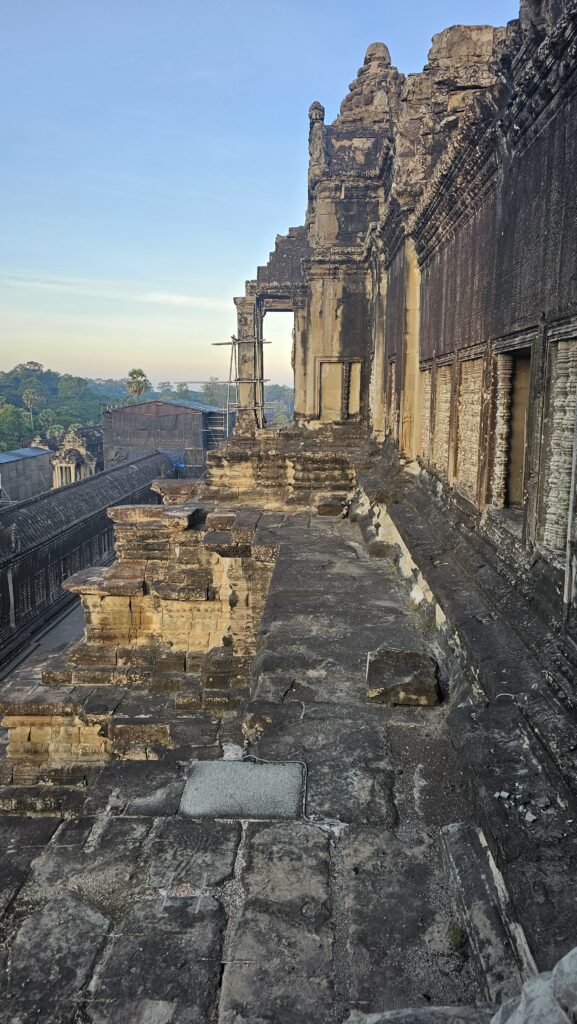
The scale alone is astonishing. Walking through the ancient corridors, climbing steep staircases, and standing beneath stone towers that have survived centuries creates a feeling that photographs simply cannot replicate.
What impressed me most was the variety.
Many visitors hear the name Angkor Wat and assume it refers to a single structure. In reality, the wider archaeological park contains numerous temples, each with its own character and atmosphere.
Some are beautifully restored.
Others remain partially reclaimed by nature.
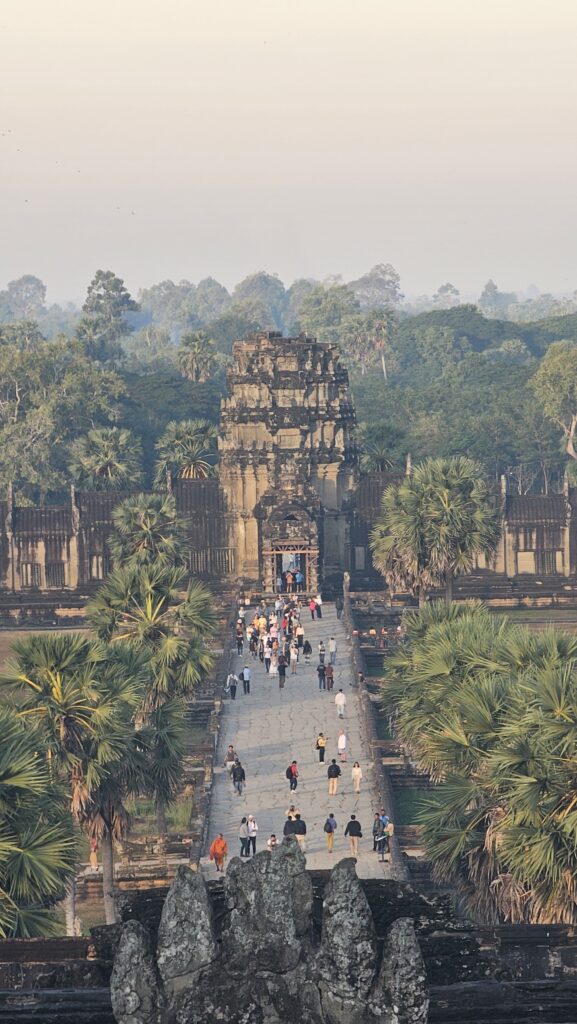
Some attract large crowds.
Others offer moments of surprising solitude.
That variety is what keeps bringing people back.
It is certainly one of the reasons I returned in 2024 and plan to visit again in 2026.
Exploring Angkor Wat And The Temple Complex
My first visit to Angkor Wat in 2018 was filled with surprises.
The biggest surprise was discovering that the experience extends far beyond the famous temple featured on postcards.
Every time I thought I had seen everything, another structure appeared in the distance. More pathways emerged. More ruins revealed themselves. More opportunities for exploration presented themselves.
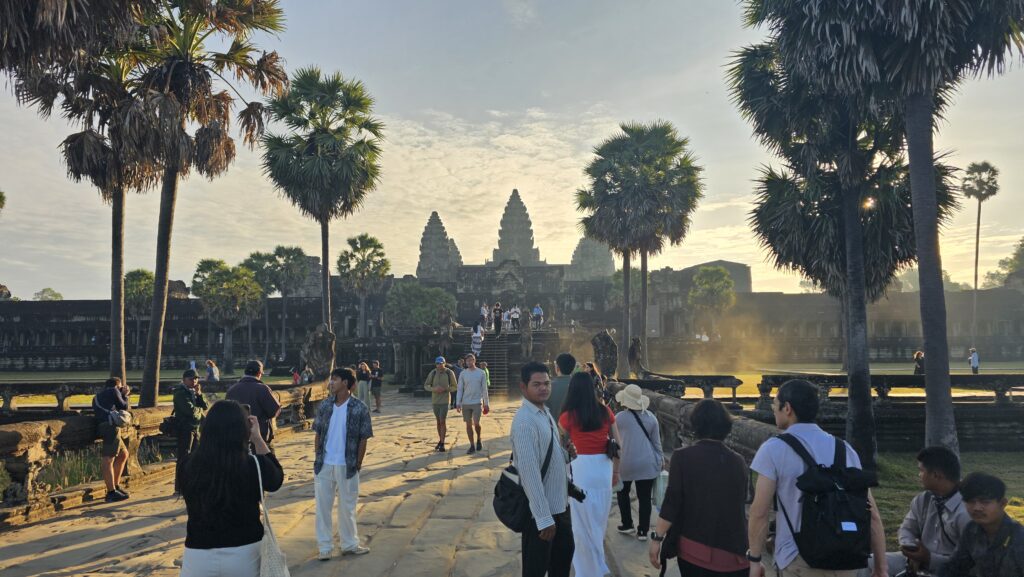
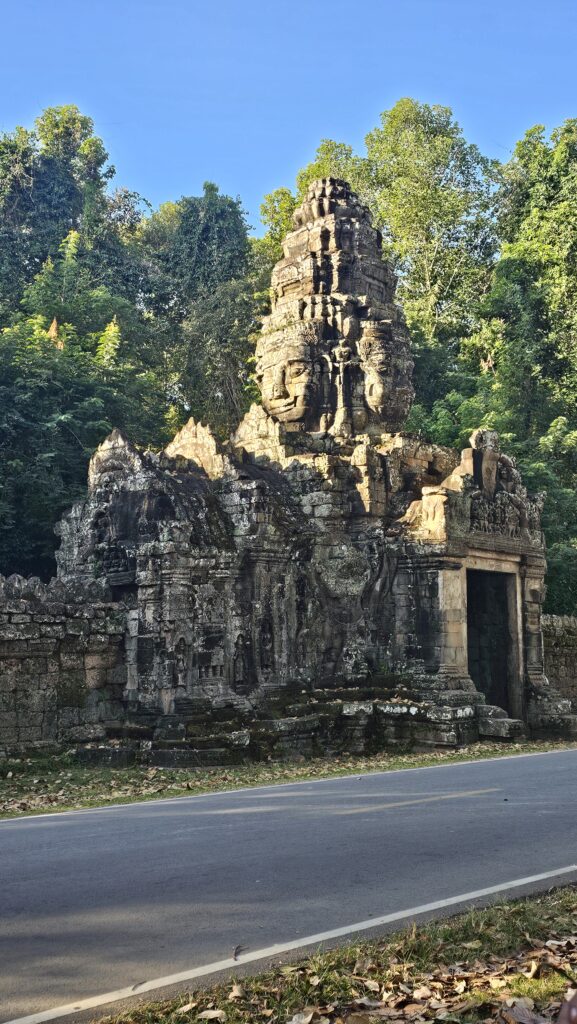
The main Angkor Wat temple is naturally the star attraction.
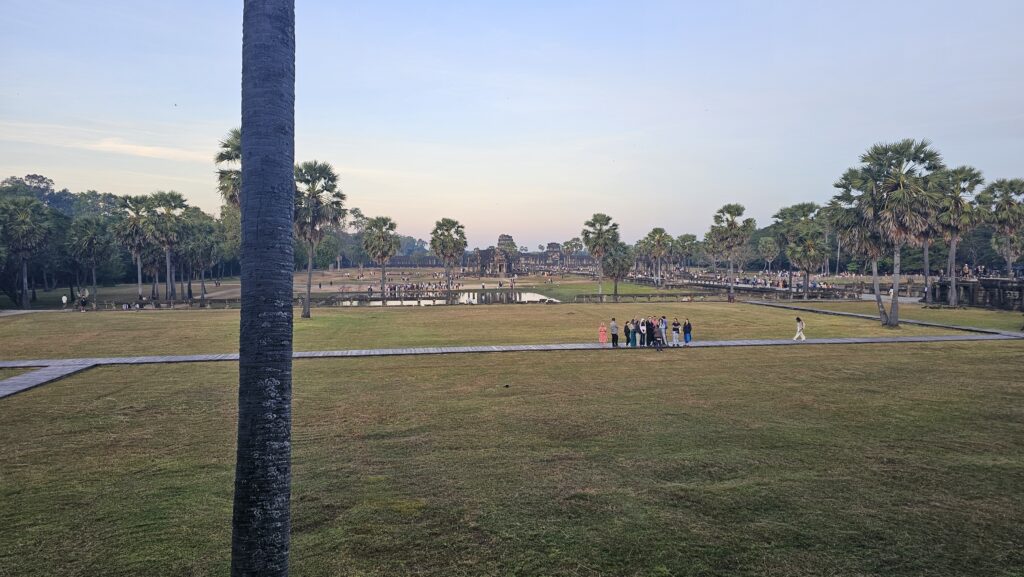
Its scale becomes obvious the moment you begin walking along the causeway leading towards the entrance. The closer you get, the larger it appears.
Inside, endless corridors stretch through the complex. Intricate carvings cover walls that have stood for centuries. Every corner offers another perspective worth photographing.
Photography enthusiasts will find themselves constantly stopping.
The interplay of light and shadow throughout the temple changes dramatically during the day. Early morning provides soft lighting, while later hours create stronger contrasts and more dramatic images.
One of my favourite aspects of Angkor Wat is simply wandering without constantly checking a map.
Sometimes the best experiences come from turning down a corridor, climbing a staircase, or exploring an area that receives less attention from tour groups.
The upper levels of Angkor Wat are particularly rewarding.
After sunrise, I strongly recommend heading towards the elevated sections as early as possible. Access is limited, and queues build quickly. During my 2024 visit, we headed there shortly after sunrise and avoided much of the waiting that developed later in the morning.
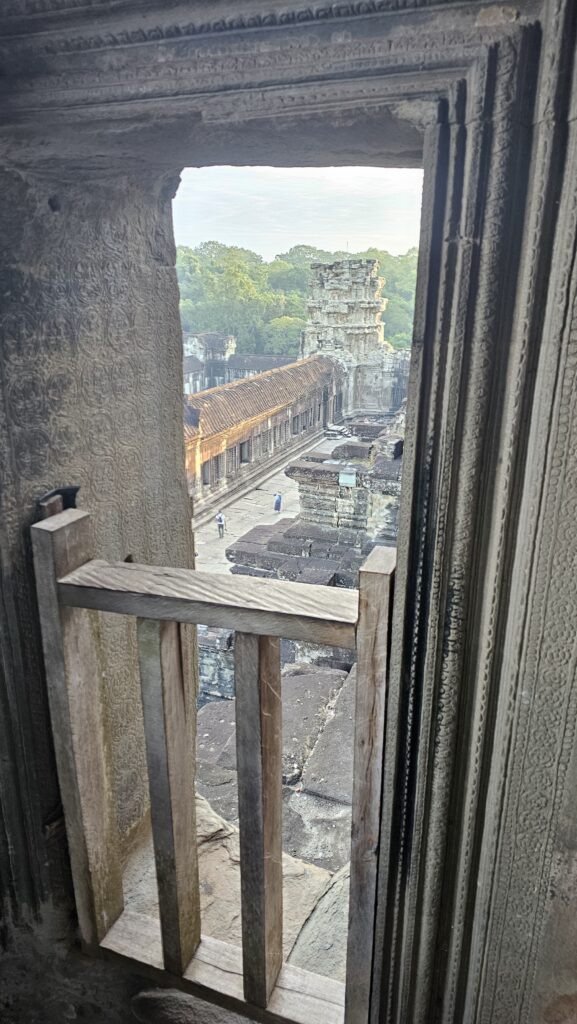
The climb is steep enough to make anyone with a fear of heights slightly nervous, but the views make the effort worthwhile.
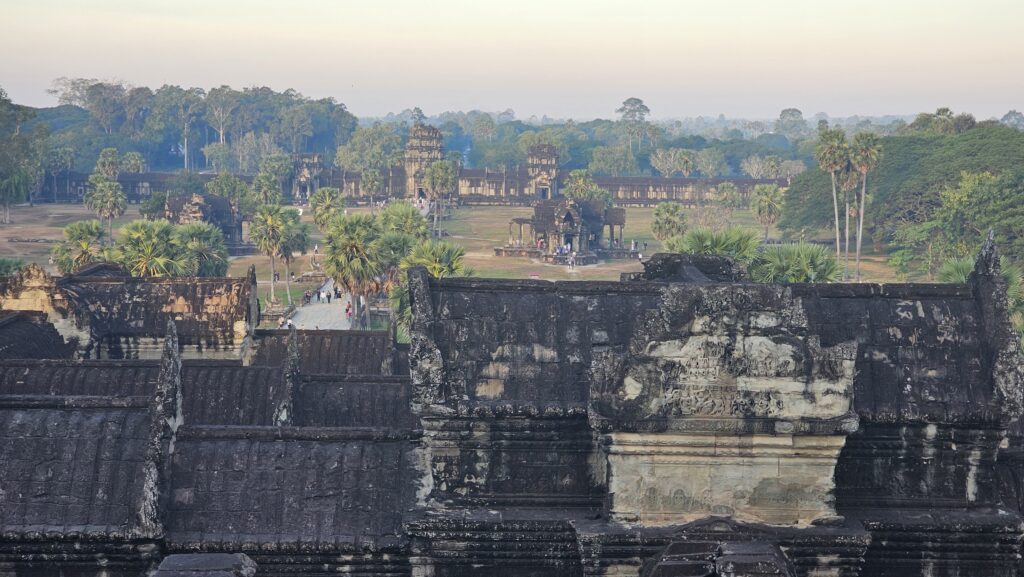
Standing above the crowds while looking across the ancient complex provides one of the best perspectives in the entire site.
The higher you go, the more impressive the scale becomes.
Angkor Wat Sunrise Experience
One of the most popular ways to experience Angkor Wat is by booking a sunrise tour. If you search for Angkor Wat online, chances are most of the photographs you see were taken during sunrise.
That was exactly what convinced me to book a sunrise tour during my 2024 visit.
On Christmas morning, my friend and I climbed into a tuk tuk long before dawn and headed towards Angkor Wat wearing Santa hats. Seeing Christmas decorations in thirty-degree heat while driving through Cambodia at three in the morning felt surreal and slightly ridiculous, but it certainly made for some memorable photos.
The roads leading towards Angkor Wat were already busy. Hundreds of tuk tuks, cars, and tour buses were making their way towards the temple complex. It quickly became obvious that we were not the only people hoping to witness sunrise over Angkor Wat.
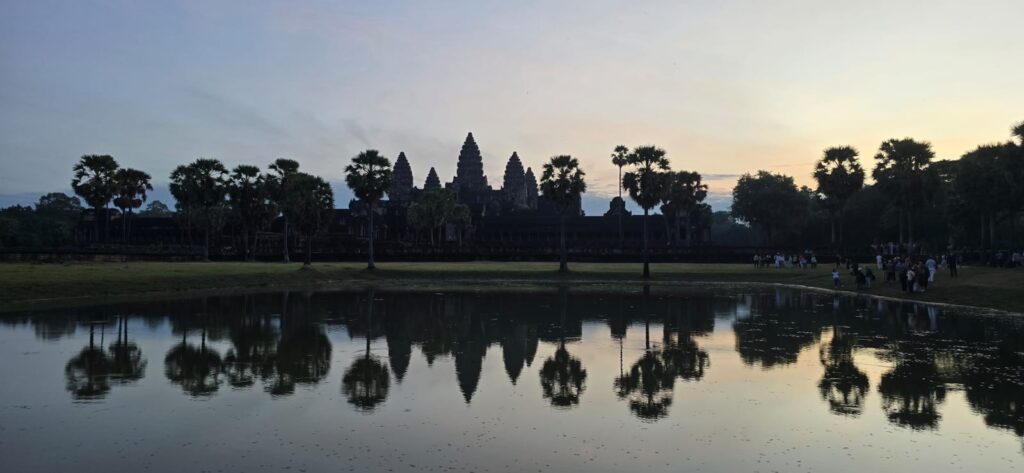
We positioned ourselves beside the famous reflection pools in front of the temple. These small lakes provide some of the most iconic photography opportunities at Angkor Wat. When conditions are perfect, the towers reflect beautifully in the still water.
Unfortunately, conditions are not always perfect.
From a photography perspective, the sunrise was slightly disappointing. If your goal is to capture a National Geographic cover photo, you may find yourself hoping for better weather or more dramatic colours.
From a personal perspective, however, it was wonderful.
Watching the sky slowly brighten behind one of the world’s most famous temples is still a special experience regardless of whether the photographs turn out perfectly.
The biggest challenge was the crowd.
People were packed tightly around the reflection pools. Everyone wanted the best viewpoint. At one stage, it genuinely felt like some visitors were trying to claim territory as if they were purchasing beachfront property. A particularly noisy group seemed determined to squeeze into every available gap.
Patience is definitely required.
Fortunately, once the sun finally rises, most of the crowd begins to spread throughout the complex. The atmosphere immediately becomes more relaxed, and exploring becomes significantly easier.
That is when Angkor Wat truly comes alive.
Discovering Ta Prohm And The Famous Tomb Raider Temple
While Angkor Wat receives most of the attention, Ta Prohm became one of my favourite temples within the wider Angkor Archaeological Park.
Many people know it as the Tomb Raider Temple because scenes from the Angelina Jolie movie were filmed there.
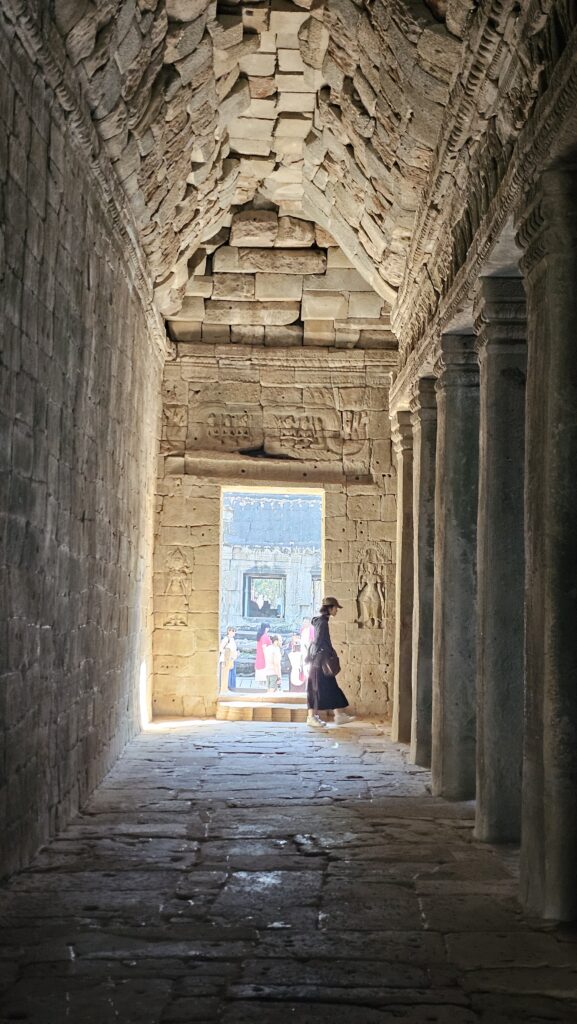
Even if you have never seen the film, Ta Prohm is unforgettable.
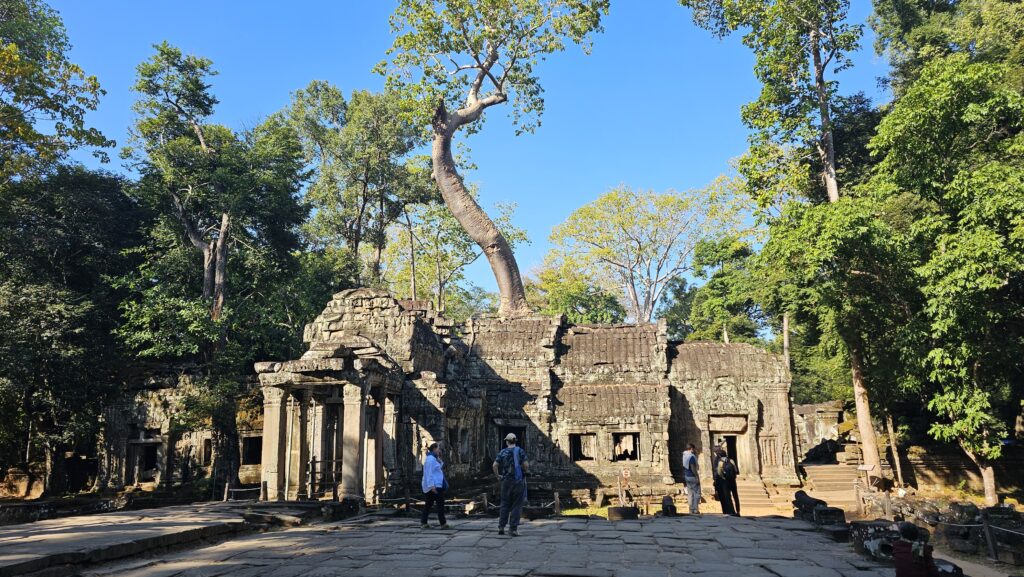
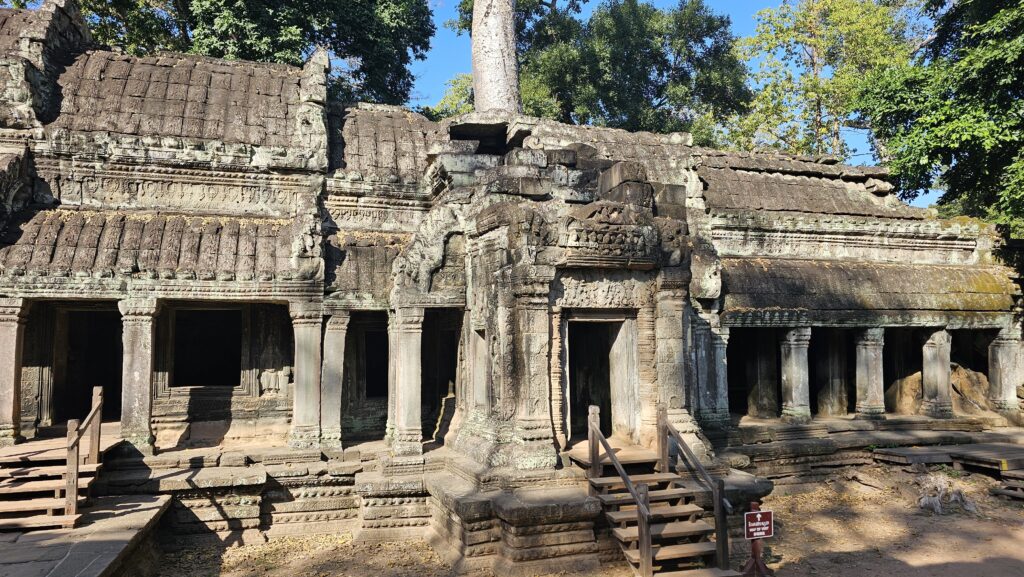
Unlike Angkor Wat, which has undergone extensive restoration, Ta Prohm feels much more connected to nature. Massive tree roots wrap around ancient stone walls. Giant trees appear to grow directly from the buildings themselves.
The result is something that almost feels fictional.
At times, it resembles a movie set rather than a real historical site.
Walking through Ta Prohm creates a completely different atmosphere compared to Angkor Wat. There is a sense of mystery here that is difficult to describe. Every corner reveals another dramatic combination of stone and jungle.
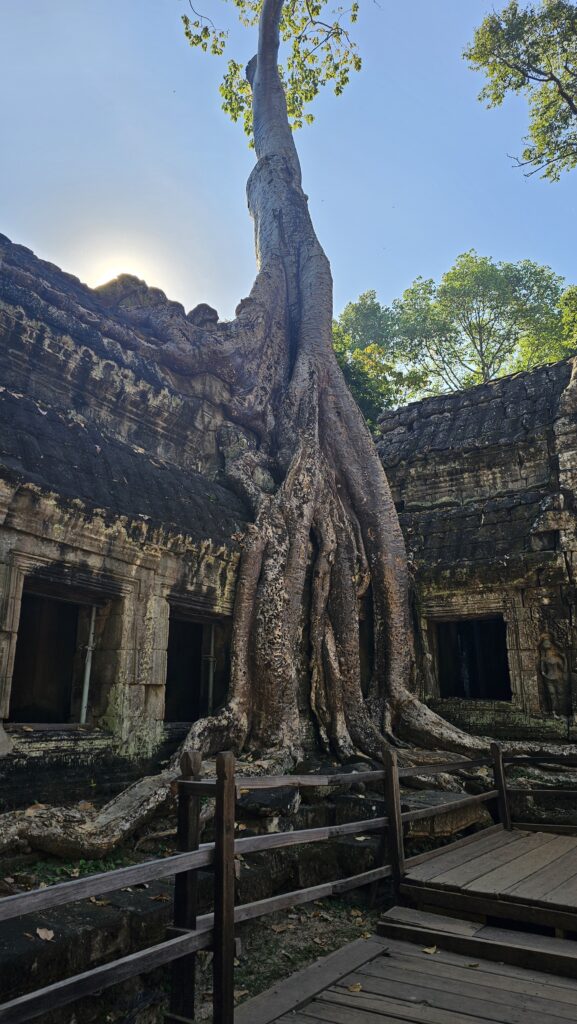
For photographers, it is one of the most rewarding locations within the Angkor complex.
Some of my favourite images from Cambodia came from this temple.
The scale of the trees alone is impressive, but seeing them intertwined with structures that have existed for centuries creates scenes that are impossible to forget.
The Walking Experience And Daily Challenges
One thing many travel guides fail to emphasize is just how physically demanding Angkor Wat can be.
The distances between temples add up quickly.
The climbing adds up quickly.
The heat adds up quickly.
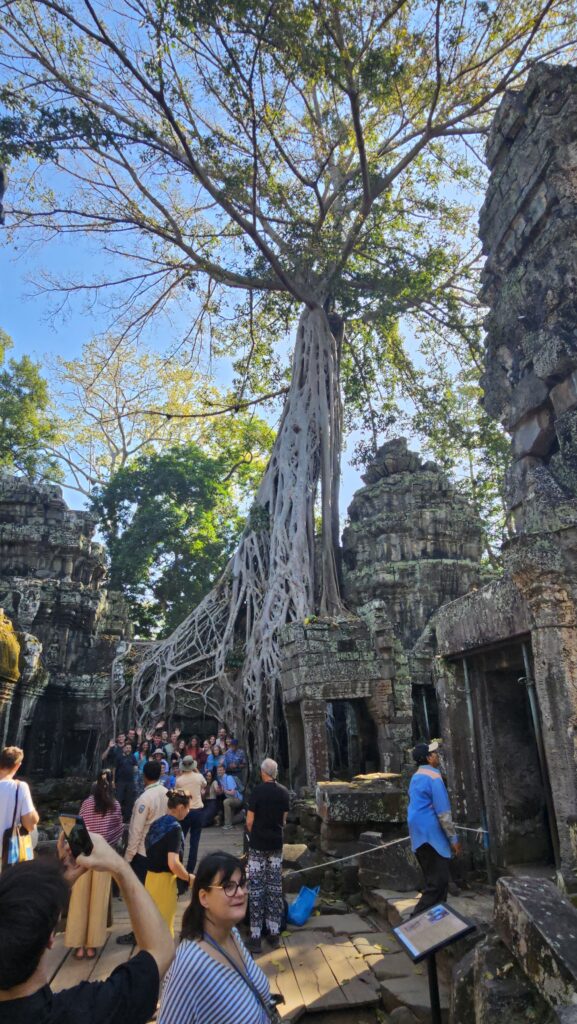
By the middle of the day, even experienced travellers begin moving a little slower.
My first visit in 2018 involved a private vehicle with air conditioning, which turned out to be one of the best decisions I made. Having a cool place to recover between temple visits made a significant difference.
During my 2024 visit, the combination of an early start, hours of walking, climbing steep staircases, standing in crowds, and dealing with intense heat eventually caught up with us.
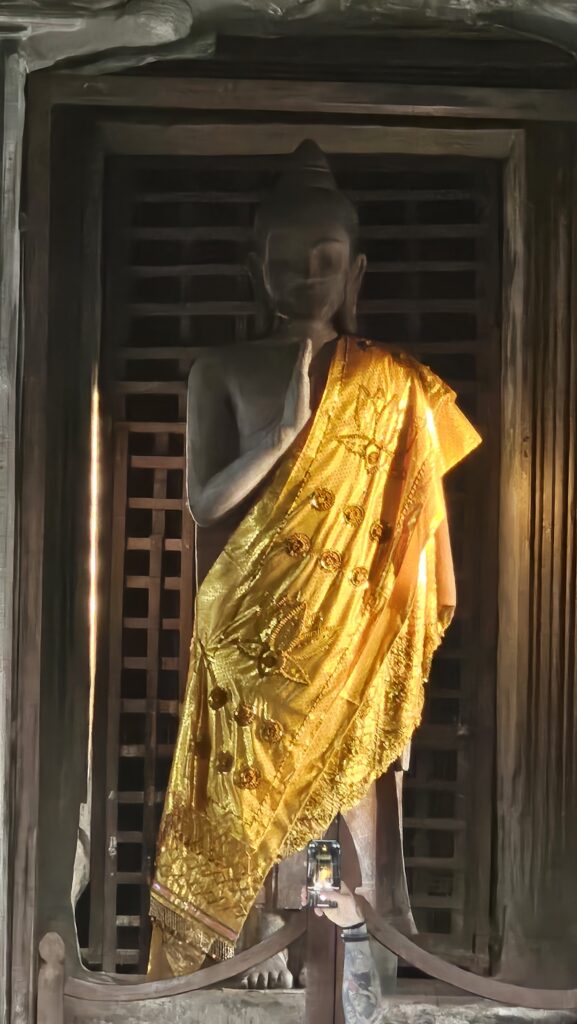
There was still another temple on our planned itinerary.
We never made it.
At some point, exhaustion simply won the argument.
That is not necessarily a bad thing.
One lesson I have learned from travel is that trying to see absolutely everything often reduces overall enjoyment. Sometimes it is better to appreciate what you have already experienced rather than turning a holiday into an endurance challenge.
Food, Local Atmosphere And Life In Siem Reap
Although Angkor Wat is the headline attraction, Siem Reap deserves attention in its own right.
The town has changed enormously since my first visit.
Modern roads, improved infrastructure, and increased tourism have transformed the city while still preserving much of its original character.
One of my favourite aspects of Siem Reap is how easy it is to switch between different atmospheres.
One moment you can be exploring ancient temples.
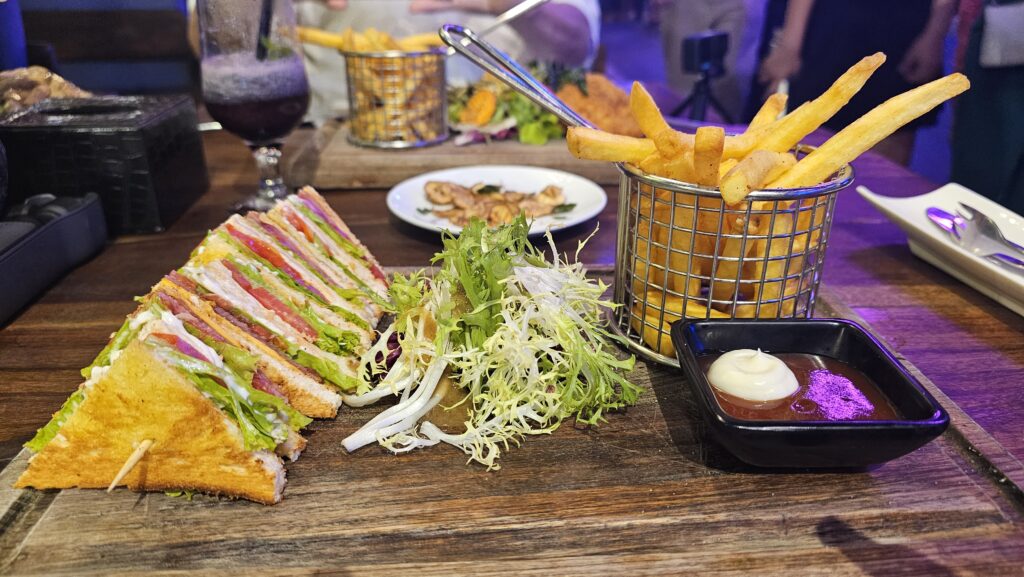
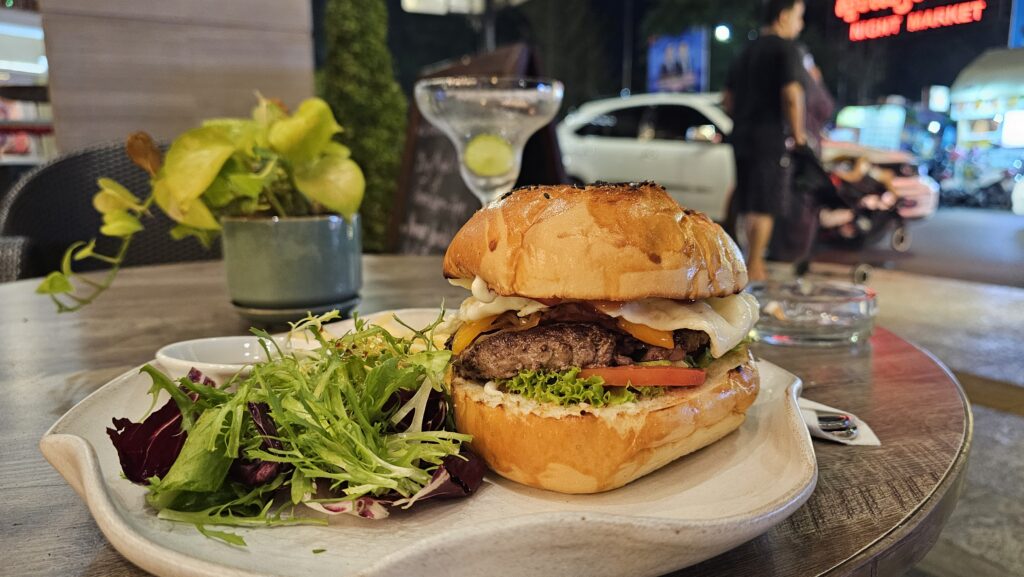
The next you can be enjoying street food beside a busy market.
Street food remains one of the highlights of visiting Cambodia. The variety is impressive, prices are generally affordable, and there is always something interesting to try.
For more adventurous travellers, there are plenty of unusual experiences available.
One of the most memorable for me involved fish spas. It was the first place where I had tiny fish nibbling at my feet. It felt strange at first, slightly ticklish, and definitely memorable.
Shopping is another popular activity. Markets throughout Siem Reap sell everything from souvenirs and clothing to artwork and local handicrafts.
The town feels busy without becoming overwhelming.
Locals are generally friendly and welcoming, and it is common to encounter fellow travellers from all over the world.
Hotels Near Angkor Wat
Accommodation in Siem Reap caters to virtually every budget, which is one of the reasons Angkor Wat remains so accessible.
Travellers seeking luxury often choose properties such as Raffles Grand Hotel d’Angkor, Park Hyatt Siem Reap, or FCC Angkor by Avani. These hotels offer excellent service, beautiful swimming pools, spacious rooms, and convenient access to both the town centre and Angkor Wat. They are ideal for visitors wanting to combine temple exploration with a more comfortable and relaxing stay.
For travellers looking for something in the middle price range, Golden Temple Hotel, Saem Siemreap Hotel, and Lotus Blanc Resort provide an excellent balance between comfort and affordability. These properties offer quality facilities, welcoming staff, and a peaceful atmosphere after long days spent exploring Angkor Wat and the surrounding temples.
Budget-conscious visitors are equally well served. Onederz Hostel Siem Reap, Lub d Cambodia Siem Reap, and Mad Monkey Siem Reap remain popular choices among backpackers and solo travellers. These options provide affordable accommodation, social environments, and convenient locations without sacrificing comfort.
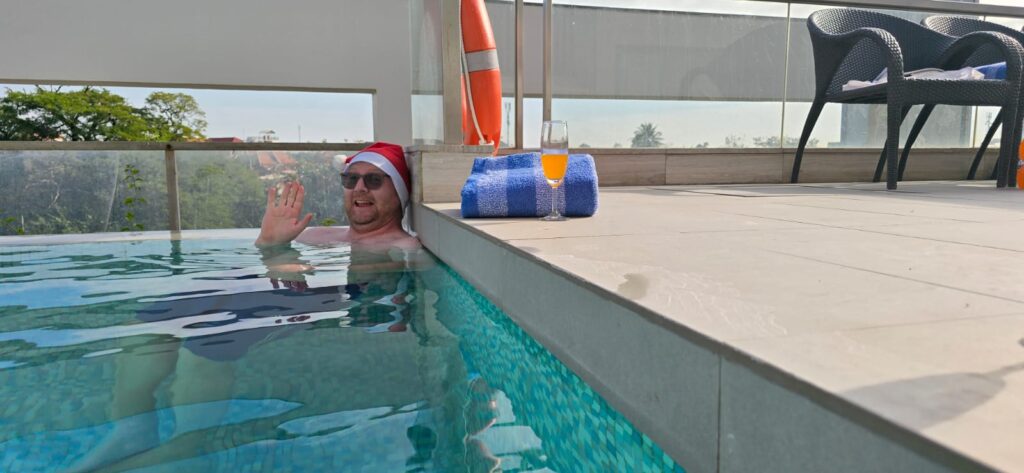
During my 2024 trip, we stayed at ibis Styles Siem Reap, and it exceeded expectations. The hotel felt far more upscale than I expected for the price. The swimming pool was excellent after long days exploring Angkor Wat, and the location could hardly have been better. One direction led towards street food stalls, while the other took you directly towards the lively atmosphere of Pub Street.
Highlights And Standout Moments
The highlight of any visit to Angkor Wat is simply experiencing the scale of the place firsthand.
Photographs cannot fully communicate how enormous the complex really is.
Watching sunrise over Angkor Wat remains a special memory despite the crowds.
Exploring the upper levels of the temple provided some of the best views of the entire site.
Ta Prohm delivered some of the most unique scenery.
The Christmas morning tuk tuk ride while wearing Santa hats was completely unexpected but unforgettable.
The contrast between ancient temples and modern Siem Reap was fascinating.
Meeting travellers from around the world added another enjoyable dimension to the experience.

Even the small moments stand out in memory. Sharing laughs with locals, taking selfies with fellow tourists, discovering hidden corners away from the crowds, and finding unexpected photography opportunities all contributed to making Angkor Wat such a memorable destination.
Honest Review Of Angkor Wat
Angkor Wat is one of the most impressive historical sites I have ever visited.
The positives are obvious.
The scale is extraordinary.
The history is fascinating.
The architecture is stunning.
Photography opportunities are endless.
Siem Reap offers excellent accommodation and plenty of food options.
Transport is simple and affordable.
However, no destination is perfect.
The heat can be exhausting.
The crowds can become frustrating, particularly during sunrise.
Some visitors may underestimate how physically demanding the experience can be.
Certain areas can feel overcrowded during peak periods.
If I could change one thing about my previous visits, I would probably spread the experience across more days. Trying to see too much in a single day can reduce enjoyment.
For travellers interested in history, photography, culture, architecture, or unique experiences, Angkor Wat is absolutely worth visiting.
For those who dislike heat, walking, or crowds, preparation becomes especially important.
Overall, Angkor Wat remains one of the few attractions that genuinely lives up to its worldwide reputation.
Angkor Wat FAQ
What Is The Best Time To Visit Angkor Wat?
The best time to visit Angkor Wat is generally between November and February when temperatures are slightly cooler and conditions are more comfortable for exploring. This period also coincides with peak tourism season, so visitors should expect larger crowds.
How Much Does It Cost To Visit Angkor Wat?
Ticket prices vary depending on the duration of your pass. Most visitors choose either a single-day pass or a multi-day pass. Additional costs include transportation, food, drinks, and optional guided tours.
Is Angkor Wat Safe For Tourists?
Angkor Wat and Siem Reap are generally considered safe destinations for tourists. Basic travel precautions should always be followed, but most visitors experience no significant issues during their stay.
How Difficult Is The Walking At Angkor Wat?
The walking can be more demanding than many people expect. Visitors should prepare for long distances, stairs, uneven surfaces, humidity, and extended periods outdoors.
What Is The Weather Like At Angkor Wat?
Cambodia is typically hot throughout the year. Temperatures often exceed thirty degrees Celsius, particularly during the dry season. Hydration and sun protection are essential.
Is Angkor Wat Suitable For Solo Travellers?
Absolutely. Siem Reap has a well-developed tourism industry, making it easy for solo travellers to join tours, meet other visitors, and navigate the area independently.
Are There Good Photography Opportunities At Angkor Wat?
Angkor Wat is one of the best photography destinations in Southeast Asia. Sunrise reflections, ancient architecture, jungle-covered temples, and elevated viewpoints all provide excellent opportunities for photographers.
How Many Days Should I Spend At Angkor Wat?
While a single day allows visitors to see the highlights, two or three days provides a much more relaxed experience and allows time to explore additional temples beyond the most famous locations.
Final Thoughts On Angkor Wat
After visiting Angkor Wat in 2018 and again in 2024, I can confidently say it remains one of the most rewarding travel experiences in Southeast Asia.
The improvements in Siem Reap have made visiting easier than ever, while the temples themselves remain as impressive as they have always been.
Few destinations combine history, architecture, photography, adventure, and culture as effectively as Angkor Wat.
Whether you choose a sunrise tour, spend days exploring hidden corners of the temple complex, or simply enjoy wandering through ancient corridors, Angkor Wat leaves a lasting impression.
I have already visited Angkor Wat twice.
I will be returning again in 2026.
That alone probably tells you everything you need to know.
If you are considering visiting Angkor Wat, my advice is simple.
Go.
You will come home tired, sweaty, and probably with thousands of photographs on your camera.
You will also come home with memories that last a lifetime.




Leave a Reply